

The scientific research team of the School of Intelligent Manufacturing, Jianghan University, visited the Zhiyuan Innovation (Shanghai) Technology Co., Ltd. (AGIBOT) in Shanghai on July 27 for an exchange and research project on industry-education integration. This visit further advanced industry-education integration innovation, boosted collaborative scientific research innovation, and built a new ecosystem of university-enterprise collaborative education.
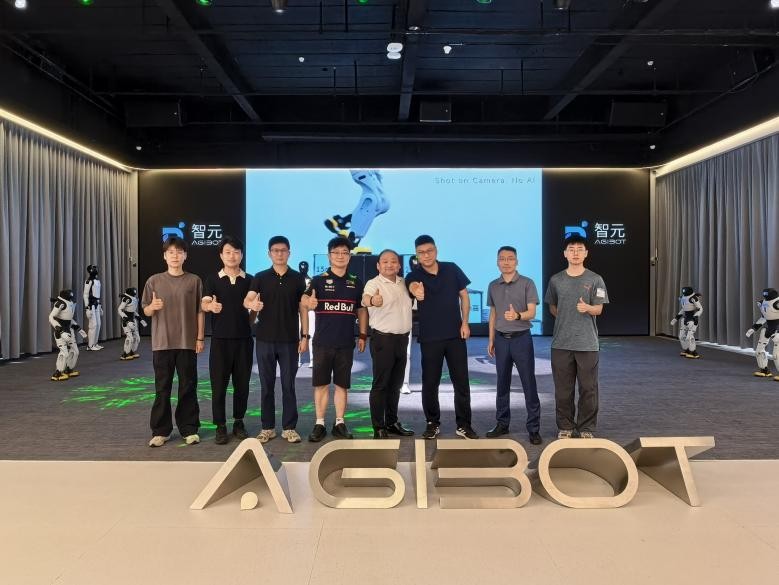
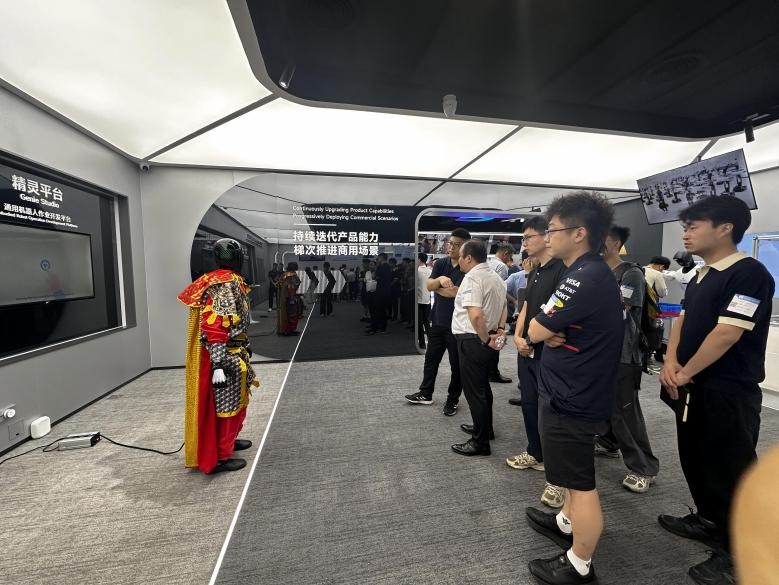
The delegation was warmly welcomed at AGIBOT. In the showroom, they observed the practical applications of humanoid robots in multiple scenarios up close, including commercial scenarios such as tour guidance, shopping assistance, service and retail stations, and industrial deployment solutions such as production line loading and unloading, palletizing and depalletizing, and logistics sorting. The impressive motion intelligence, interaction intelligence and operation intelligence of the general-purpose AI robots revealed the infinite possibilities of technological transformation in the intelligent manufacturing field. The team gained a more intuitive and in-depth understanding of the cutting-edge trends and practical applications of current embodied intelligent robot industry.
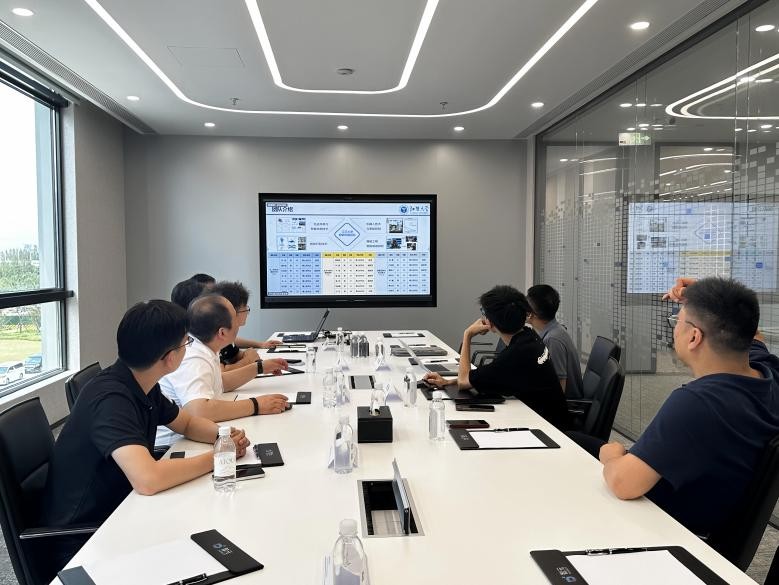
At a symposium in a conference room, Prof. Xuan Liang introduced the school’s technical research in the field of embodied intelligent robots, elaborated on the school’s discipline layout, research directions, faculty strength, and student training characteristics, and highlighted the phased achievements of the team in robot perception and control and other related fields. The product director of AGIBOT presented the company’s product layout and commercialization progress in the embodied intelligent robot sector. The two sides had in-depth discussions on topics including industry-education integration, university-enterprise collaborative education, and collaborative scientific research innovation; they fully exchanged views on specific cooperation directions such as joint construction of practical teaching bases and joint research projects. A number of consensuses were reached. Both sides agreed that universities and enterprises should leverage their respective advantages, strengthen resource integration, promote the two-way empowerment of academic research and industrial practice, and jointly cultivate high-quality innovative talents for the high-quality development of the embodied intelligent industry.
This visit and research has built an efficient communication bridge for both sides and laid an important foundation for deepening follow-up cooperation. In the future, the School of Intelligent Manufacturing will continue to improve the model for industry-education integration and university-enterprise collaborative education, actively explore long-term cooperation mechanisms with leading enterprises in the industry, support talent cultivation for the embodied intelligent robot industry, and promote the coordinated development of higher education and industrial enterprises. This will inject new momentum into the high-quality development of regional economy.
By: Xuan Liang, He Yuwei, Huang Yunya, and Li Sha