

The opening ceremony of the 2026 Campus Food Culture Week was held on the basketball court in the south of the campus on October 21. Qin Daoming, Party Secretary of the university, declared the event open. President Jing Xinhua presented awards to the Top Ten Canteen Service Windows of 2026.
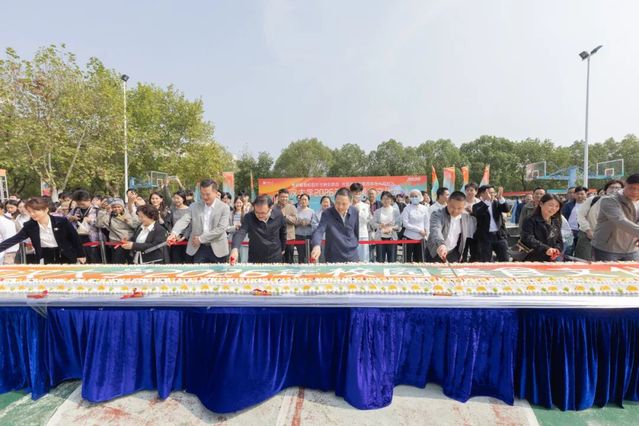
Centered on the theme “Fragrant Food on Campus, Guarding Food Safety; Clean Plates and Thrift, Cultivating Virtue Together”, the event will run until October 24. Through a diverse format combining food displays, cultural interactions, labor practice and moral education, it aims to fulfill the fundamental task of fostering virtue through education, implement the mission of education through service, promote traditional Chinese food culture, raise food safety awareness among faculty and students, and encourage the whole campus to develop thrifty habits.
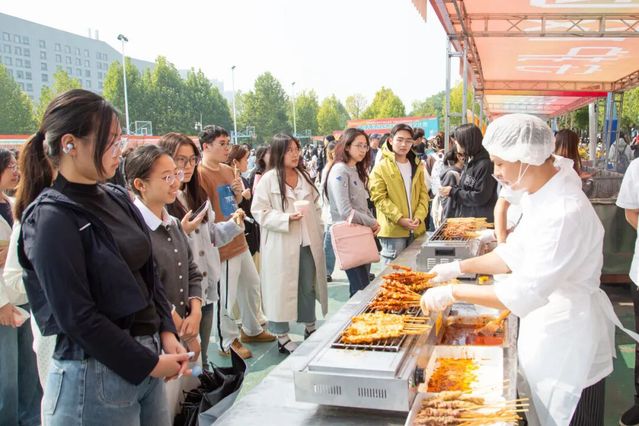
Shortly before 11 a.m., the exhibition area was filled with tempting aromas, drawing long queues of students eager to taste the food. The lively atmosphere was further enlivened by artistic performances, including the guzheng ensemble Cut Indigo Flowers, the song I Love You, China, and the youth dance Zoo. A total of 5,000 copies of the “Clean Plate Campaign” proposal and 5,000 activity coupons were distributed to call on everyone to curb food waste starting with every meal.
The event also featured staff skill contests and faculty-student cooking competitions to improve canteen service quality through competition-driven practice. Also on campus, Wuhan’s top souvenir brands were introduced, discount coupons from reputable catering businesses were distributed, and specialty snacks from time-honored shops were showcased, inviting teachers and students to explore local flavors and strengthen their connection with the city. A dazzling drone show incorporated technological and industrial elements to broaden the scope of campus culture. Catering service constitutes an essential component of education. Beyond a gastronomic treat, this Food Culture Week functioned as a practical classroom integrating education on food safety, labor practice, frugality, and school pride. Twelve themed activities were carefully organized: the food exhibition area displayed nine major Chinese cuisines including Sichuan, Hunan, Cantonese, Jiangsu, Zhejiang, Fujian, Shandong, Anhui and Hubei cuisines, allowing teachers and students to sample regional specialties without leaving campus; the labor experience zone hosted free DIY cooking sessions guided by professional chefs, where participants learned, cooked and tasted food to build practical skills in an engaging way; the cultural heritage zone invited folk craftsmen to make traditional treats such as sugar paintings, cotton candy and sugar-coated haws, rekindling memories of China’s traditional culinary culture; the interactive zone hosted food safety consultations, quizzes on Chinese food culture and lucky draws, spreading safety knowledge and raising awareness of consumer rights protection through fun activities.
University officials noted that the university would take this event as an opportunity to continuously improve catering service quality and its cultural and educational value, develop canteens into key venues for serving the university community and fostering virtue, and enable teachers and students to share developmental gains and uphold the original aspiration of education in a fulfilling campus life.
Heads of relevant university departments, deputy Party secretaries of each school, faculty and student representatives, and invited guests attended the event.
By Yi Jun, He Mingkan, Li Sha & Liu Jin