

Recently, the Office of the Cyberspace Affairs Commission of the CPC Hubei Provincial Committee announced the list of outstanding projects in the 2025 Hubei “Strive to Be a Good Chinese Netizen” initiative. The project, Passing on Quyi, Carrying Forward the Heritage: A University Student Campaign to Promote Intangible Cultural Heritage (ICH), was submitted by the Hubei Provincial Research Center for Intangible Cultural Heritage at Jianghan University. And it was selected under the “Outstanding Works of New Mass Literature and Art” category.
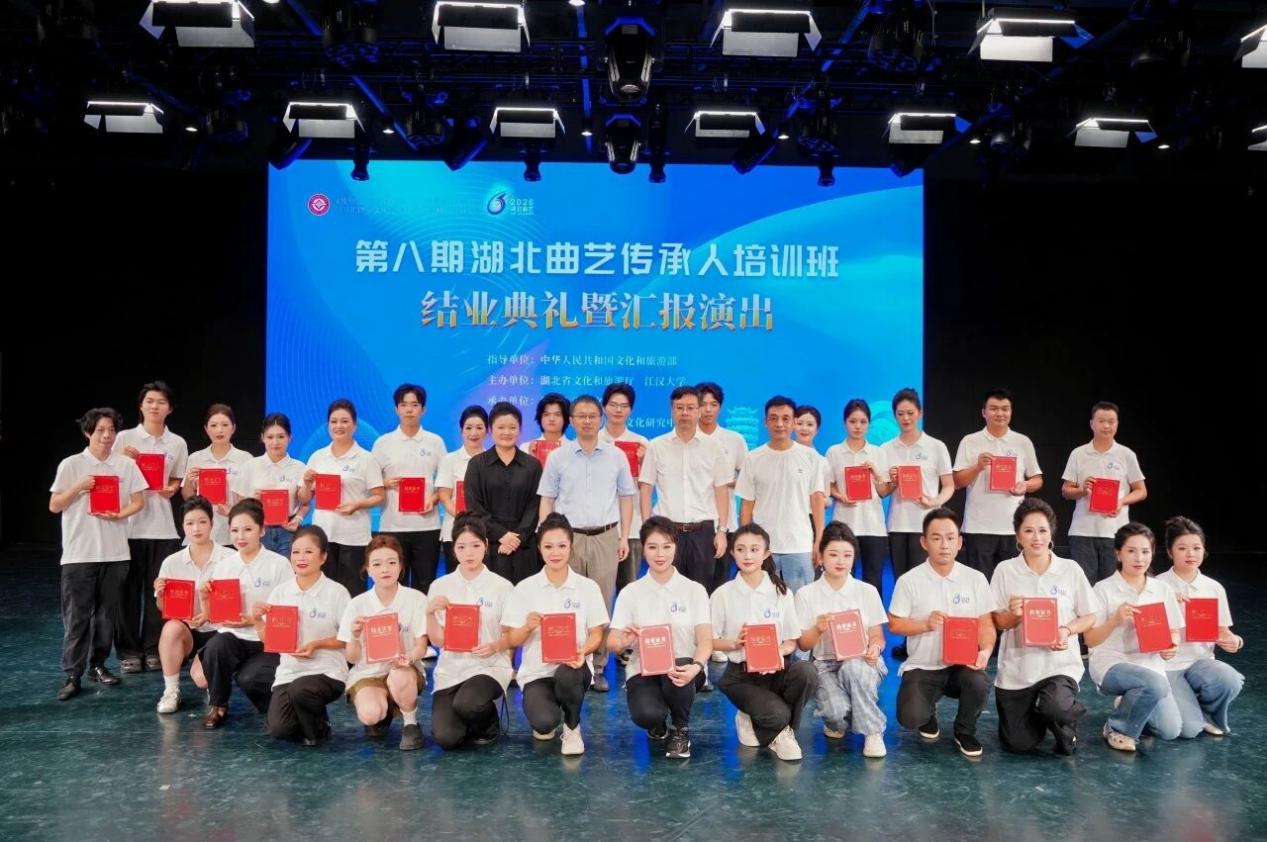
Rooted in JHU’s well-established experience in consecutively hosting Hubei Provincial Quyi (Chinese Folk Traditional Performing Arts) Inheritors Training Courses, this project advances the living inheritance and online dissemination of the ICH through three approaches, including core training, thematic exhibitions and regular communication, built upon the “Tri-Sector Collaboration + Three-Course Integration” education framework. Since the first session launched in 2018, the University has hosted this national-level training program for eight consecutive years, cultivating more than 300 key Quyi practitioners across Hubei Province, and compiling over one million characters of oral historical records as well as hundreds of hours of audio and video archives of Quyi performances. During each trainingsession, the “Heritage in Line” Volunteer Service Team, composed of enrolled students, assisted with teaching documentation and the organization of ICH materials, which were then incorporated into the Hubei Quyi Digital Resource Repository.
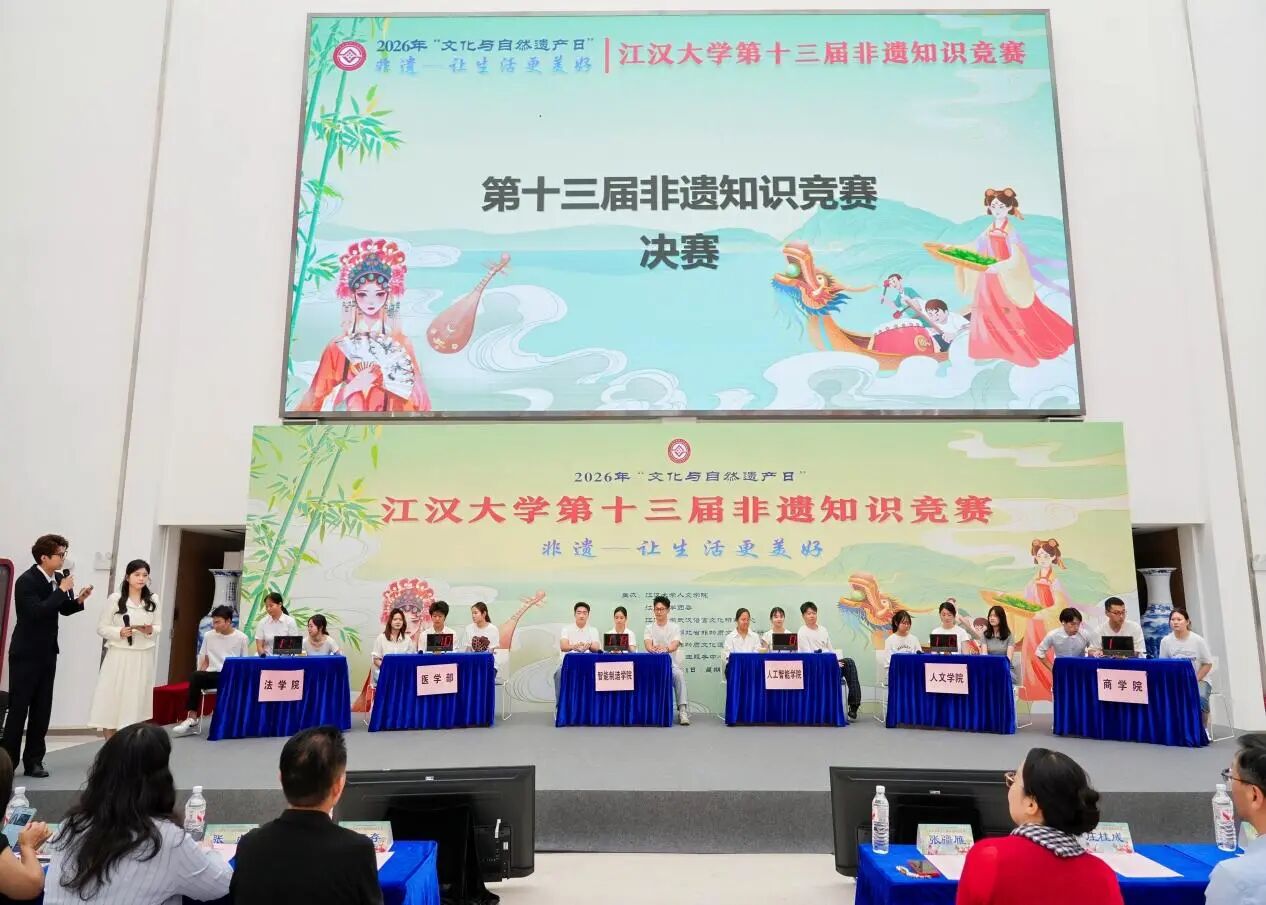
For communication,the project has realized the normalized transformation of classroom records into accessible online content. The official WeChat Video Account “Jianghan University ICH” maintains steady updates throughout each training cycle. During the 2025 Hubei Xiaoqu (a regional folk song genre) Inheritors Training Course, the account reached a single-week view count of 34,456 with 18 newly released videos. During the 2026 “Cultural and Natural Heritage Day” period, the Center organized a series of outcome demonstrations and award ceremonies covering ICH knowledge contests, ICH talent showcases, and the AI video creation competition titled “My Hometown ICH, I Speak for It”, guiding students to document ICH craftsmanship and tell inheritance stories from a digital perspective. Selected short video works have been continuously distributed to platforms including Xuexi Qiangguo, Changjiang Cloud, and Wuhan Release, further expanding the visibility and public participation of university-led ICH communication.
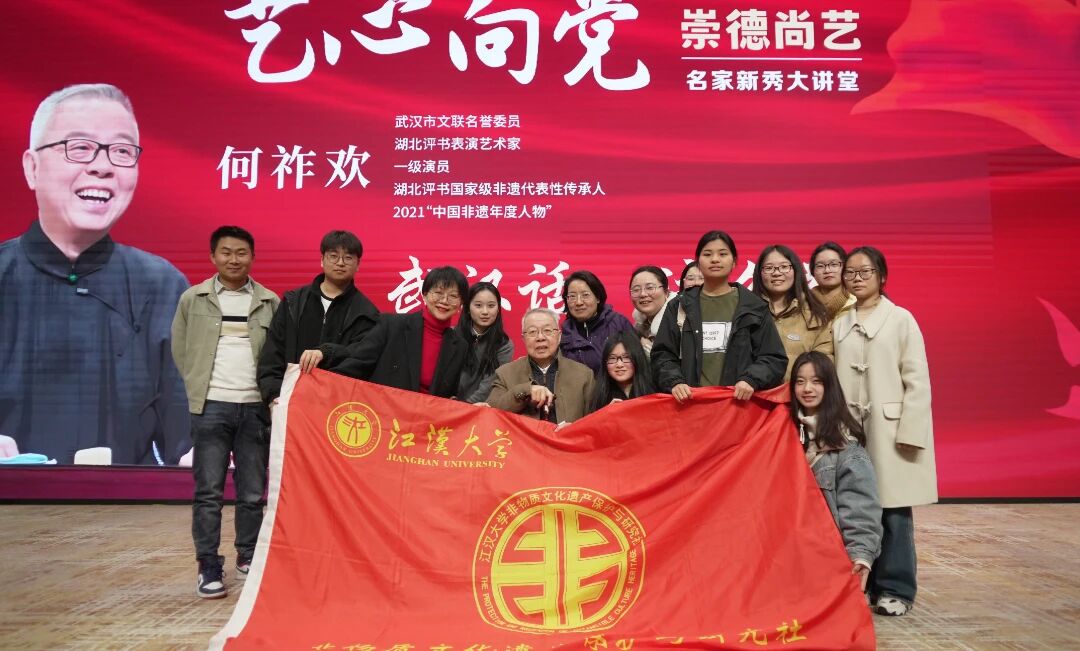
This recognition marks an official affirmation of JHU’s efforts in leveraging university resources to promote the online dissemination of ICH. Relevant officials from the Hubei Intangible Cultural Heritage Research Center stated that the Center will continue to deepen the collaborative mechanism linking “universities, professional art troupes, government authorities and local communities”, and contribute university-led strength to the inheritance and communication of ICH in the Yangtze River Economic Belt, relying on existing carriers including training courses, Heritage Day exhibitions, and short video creation initiatives.
By Deng Sibo, Yi Jun, Li Sha and Liu Jin